Tire Rotation, Balancing, and Wheel Alignment: What Is the Difference?
August 31, 2026
Tire rotation, wheel balancing, and alignment are often grouped together, but they solve different problems. One deals with where the tires are positioned on the vehicle, one corrects weight distribution in the wheel and tire assembly, and one adjusts the angles of the wheels.
From the driver's seat, the symptoms can overlap. A vibration, uneven tread wear, or a vehicle that does not track straight can make it hard to know which service is needed. At our shop, we start with how the vehicle feels and how the tires are wearing, then check the parts that fit those symptoms.
Tire Rotation Helps Even Out Normal Wear
Tire rotation means moving the tires from one position on the vehicle to another. Depending on the drivetrain and tire design, the front tires may move to the rear, the rear tires may move forward, or the tires may cross sides as part of the pattern.
The purpose is to spread wear more evenly across the set. Front tires commonly wear faster because they steer and handle a large share of the braking load. On front-wheel-drive vehicles, they also transfer engine power to the road. Regular maintenance through rotation helps keep one pair from wearing out far ahead of the other.
Balancing Corrects Uneven Weight Around the Wheel
A tire and wheel assembly is never perfectly equal in weight all the way around. Small balance weights are added to correct those differences so the assembly can rotate without shaking the vehicle.
When a wheel is out of balance, vibration usually becomes more noticeable as road speed increases. You might feel it in the steering wheel if a front assembly is involved, or through the seat and floor when the problem is farther back. A balancing machine spins the assembly and tells us where weight needs to be added or adjusted.
Wheel Alignment Changes the Angles of the Wheels
Alignment has nothing to do with adding weights or moving tires around the vehicle. It deals with the suspension angles that determine how the wheels sit and point relative to the road.
Toe, camber, and caster are the main angles we work with. If they are out of specification, the vehicle can pull, the steering wheel can sit off-center, or the tires can wear heavily on one edge. Hitting a pothole or curb can knock the alignment out, but worn suspension parts can also let the angles change over time.
A Highway Vibration Usually Points Toward Balance First
If the main complaint is a shake that appears at a certain speed and gets worse on the highway, balance moves high on our list.
That does not mean balancing is always the answer. A bent wheel, damaged tire, internal belt separation, or suspension problem can create a similar vibration. During an inspection, we watch the tire and wheel while they spin and check for side-to-side or up-and-down movement. If the assembly is physically damaged, adding more balanced weight will not correct it.
Uneven Tire Wear Can Point Toward Rotation or Alignment
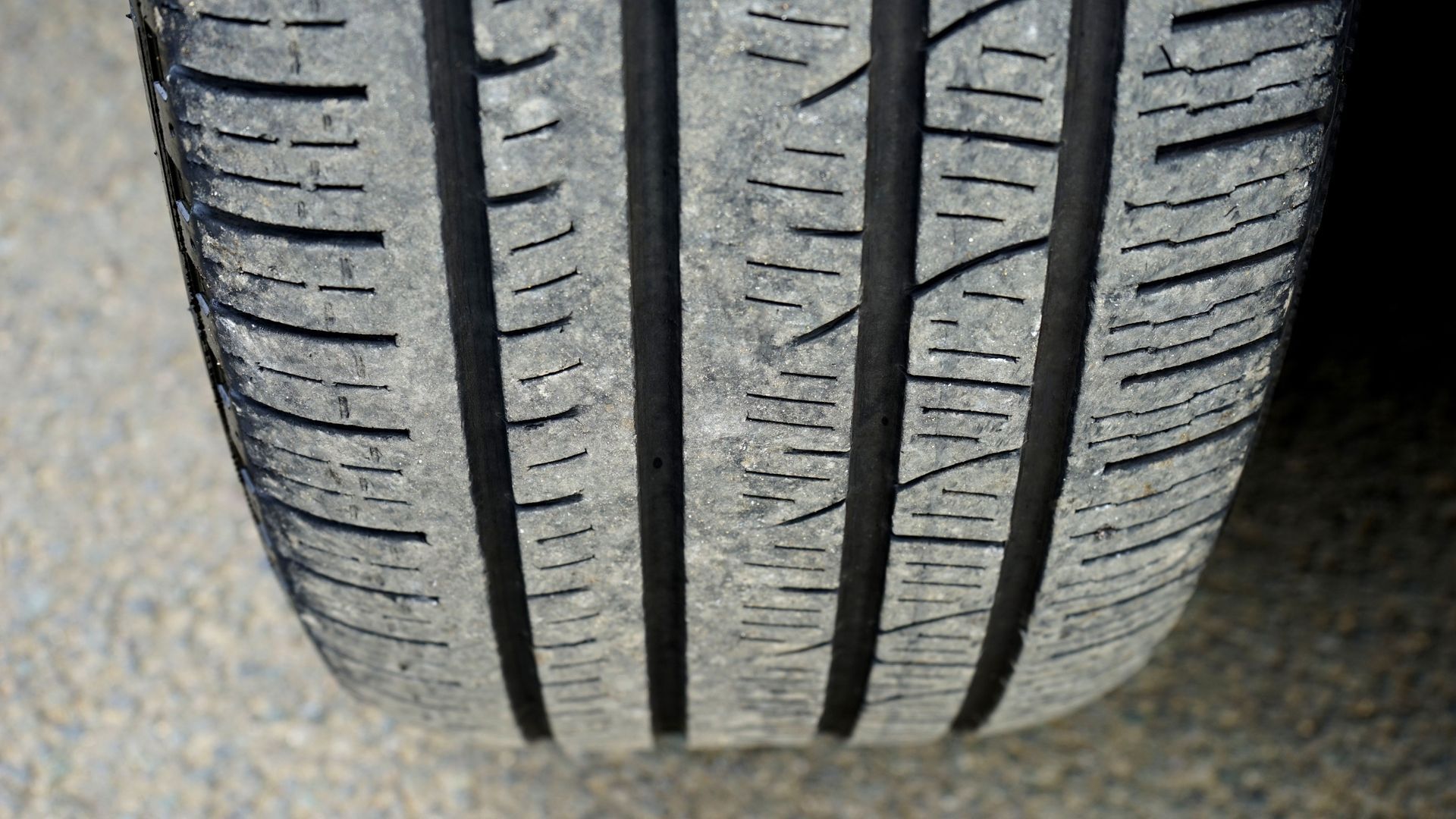
Wear patterns tell us a lot about what has been happening under the vehicle. If the front tires are simply wearing faster than the rears but the tread is otherwise even, missed rotations can be part of the problem.
Wear concentrated along one edge points us more toward alignment or suspension geometry. Cupping or scalloped tread can make us check balance, shocks, struts, wheel bearings, and other suspension parts. The key is not to assume every uneven tire needs the same service.
You Can Need More Than One of These Services
Rotation, balancing, and alignment are not either-or choices. One vehicle can need all three.
For example, the tires might be due for rotation based on mileage, one wheel could be out of balance, and the alignment could be slightly off after a pothole hit. In that case, correcting only one issue leaves the other symptoms behind. We look at tread wear, tire pressure, wheel condition, suspension play, and road-test behavior before deciding which combination makes sense.
Rotation Does Not Fix Damage That Is Already There
Moving a badly worn tire to another position does not restore missing tread. The same is true with balancing and alignment. These services correct certain conditions, but they cannot undo physical tire damage.
If a tire has exposed cords, a sidewall bulge, severe inner-edge wear, or internal separation, replacement comes first. If a tie rod, ball joint, control arm bushing, or wheel bearing is loose, we repair that before setting the alignment because the angles will not stay where we put them otherwise.
Use the Symptom to Decide Where to Start
A speed-related vibration usually sends us toward balance and tire condition. A steady pull or crooked steering wheel points to alignment. Faster wear on one axle can make rotation history important.
Sometimes the clues are mixed, which is why a road test and tire inspection are so useful. The goal is to match the service to the actual problem instead of performing all three automatically every time tires are serviced.
Get Tire Rotation, Balancing, and Wheel Alignment In Manassas, VA, With Manassas Auto & Tire
If your vehicle vibrates at highway speed, pulls to one side, or is wearing its tires unevenly, Manassas Auto & Tire in Manassas, VA, can check the tires, wheels, alignment, and suspension to determine what service it actually needs.